
Getting a fire alarm submittal rejected slows your job down, frustrates your customer, and costs you money on resubmittal fees. The worst part is that most rejections are avoidable. They come down to the same documentation gaps and drawing errors that reviewers flag over and over.
Here are five rejection reasons that show up consistently across jurisdictions.
1. Battery Calculations Using the Wrong Starting Voltage
Battery calculations must use 20.4 volts as the starting voltage, not 24 volts. Submitting calculations based on 24 volts is an automatic rejection at most jurisdictions. All devices connected to the panel need to be accounted for as well, including security devices like motion detectors and door holders if they share the panel. Missing even one device gives the reviewer grounds to kick it back.
Use 20.4V as your starting voltage on every calculation without exception, and build a device inventory checklist you run through before finalizing the battery calc. Every device goes on the sheet, every time.
2. Voltage Drop Calculations That Ignore Individual Candela Settings
Voltage drop worksheets need to show wire gauge, conductor type, distance to each device, and the current draw of each device at the selected candela setting. The current each appliance pulls is what drives the voltage loss across the run, so the number you use for that current draw matters.
The detail that catches contractors off guard is that current draw changes with candela setting. Each notification appliance has to be calculated at its own individual candela rating, not a single blanket value applied across the whole circuit. A device set at 110 candela pulls more current than the same device set at 15 candela. When the calculation uses one candela setting for every device instead of each device’s actual setting, the math can pass on paper while the real circuit falls short, and the last appliance on the run may not receive its minimum listed operating voltage.
Pull the current draw for every device from the manufacturer’s data sheet at that device’s actual candela setting, and use those values in your calculations. Go the extra step and highlight the draw on each device’s data sheet when you submit. It takes a little more time upfront and it saves you a resubmittal.
3. Boilerplate Sequence of Operations Matrix
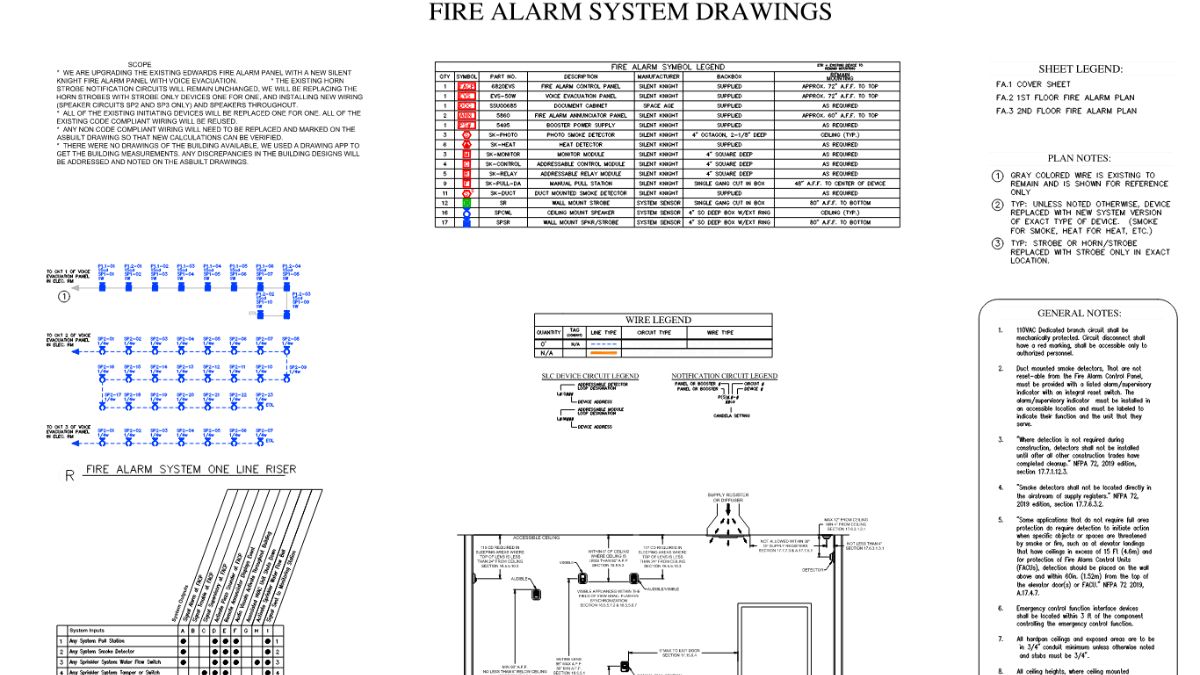
The sequence of operations must be shown on the plans in an Input/Output matrix format per NFPA 72. What gets submittals rejected is either leaving it out entirely or submitting a generic catch-all matrix with functions that do not apply to the specific project. Reviewers flag boilerplate sequences because they signal the designer did not actually think through the system.
Write the matrix fresh for each job, or start from a master template that includes every possible function and delete everything that does not apply to that specific project and system configuration. Either way, the goal is a matrix that reflects only what this system actually does. A project-specific matrix takes more time to prepare, but it tells the reviewer the drawings were done with care, which builds goodwill and speeds approval.
4. Missing Strobe Candela Ratings on Floor Plans
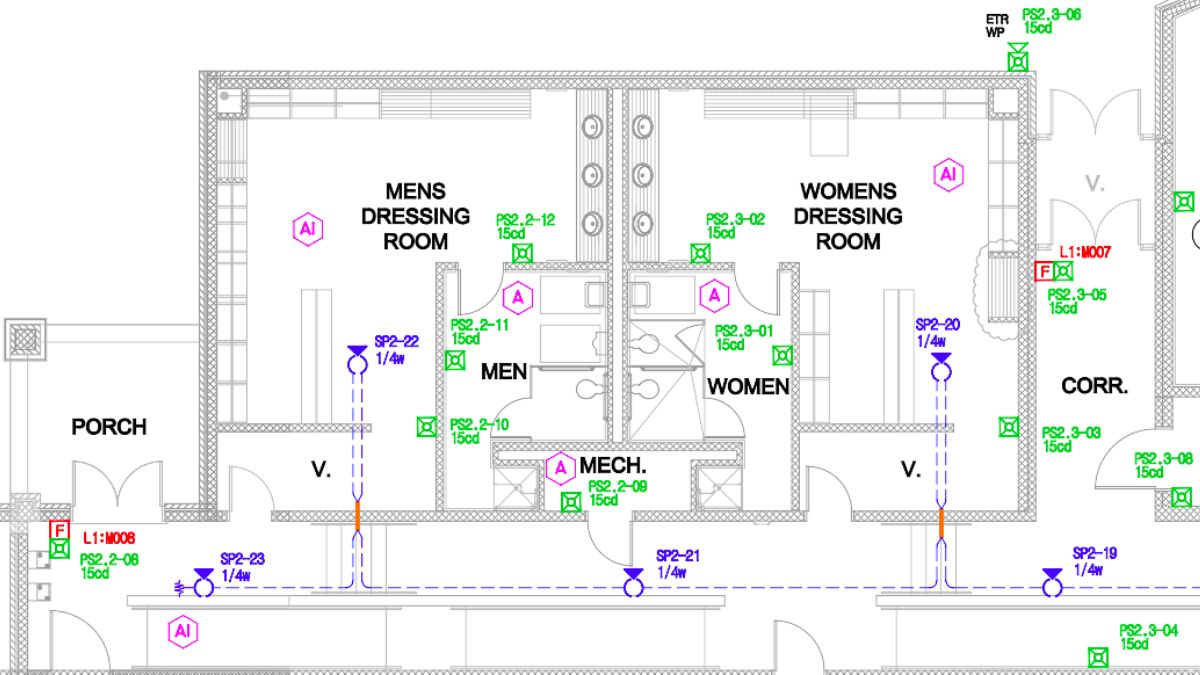
Floor plans need to show the candela rating next to each visual notification appliance. It sounds like a minor detail, but reviewers check for it specifically and missing ratings on even a few devices can get an otherwise complete submittal kicked back.
Add a final step to your drawing review process where someone checks every strobe on every floor plan and confirms the candela rating is labeled. Build it into your standard QC step before any package goes out the door.
5. AHJ-Specific Amendments and Local Quirks
Almost every jurisdiction adopts its own amendments to NFPA 72, and some have requirements that go well beyond the base code. One jurisdiction may require plans to be stamped by a NICET Level III or IV. Another may require the sequence of operations in a specific format. Some want calculations submitted as a separate document. Others have their own cover sheet or fee form that must be included or the submittal is rejected on arrival.
The only way to avoid this category of rejection is to do your homework before you submit anywhere new. Get the local AHJ’s submittal checklist if they publish one. Call the plans review office and ask if there are any local amendments or preferences. Talk to other contractors who have pulled permits in that jurisdiction. Build a file on each AHJ you work with regularly and update it when requirements change.
The contractors who get approvals on the first pass in every jurisdiction are almost always the ones who have taken the time to learn how each AHJ operates, not just what the code says.
The Bottom Line
Most rejections trace back to calculation errors, incomplete labeling, and missing documentation rather than fundamental design problems. A thorough internal review before submission catches the majority of these issues before they cost you time.
If your team is handling design in-house and submittals keep coming back with corrections, that is exactly the kind of problem outsourced design support is built to solve. Reach out to Samson Engineering to talk about how we can keep your submittals clean and your projects on schedule.